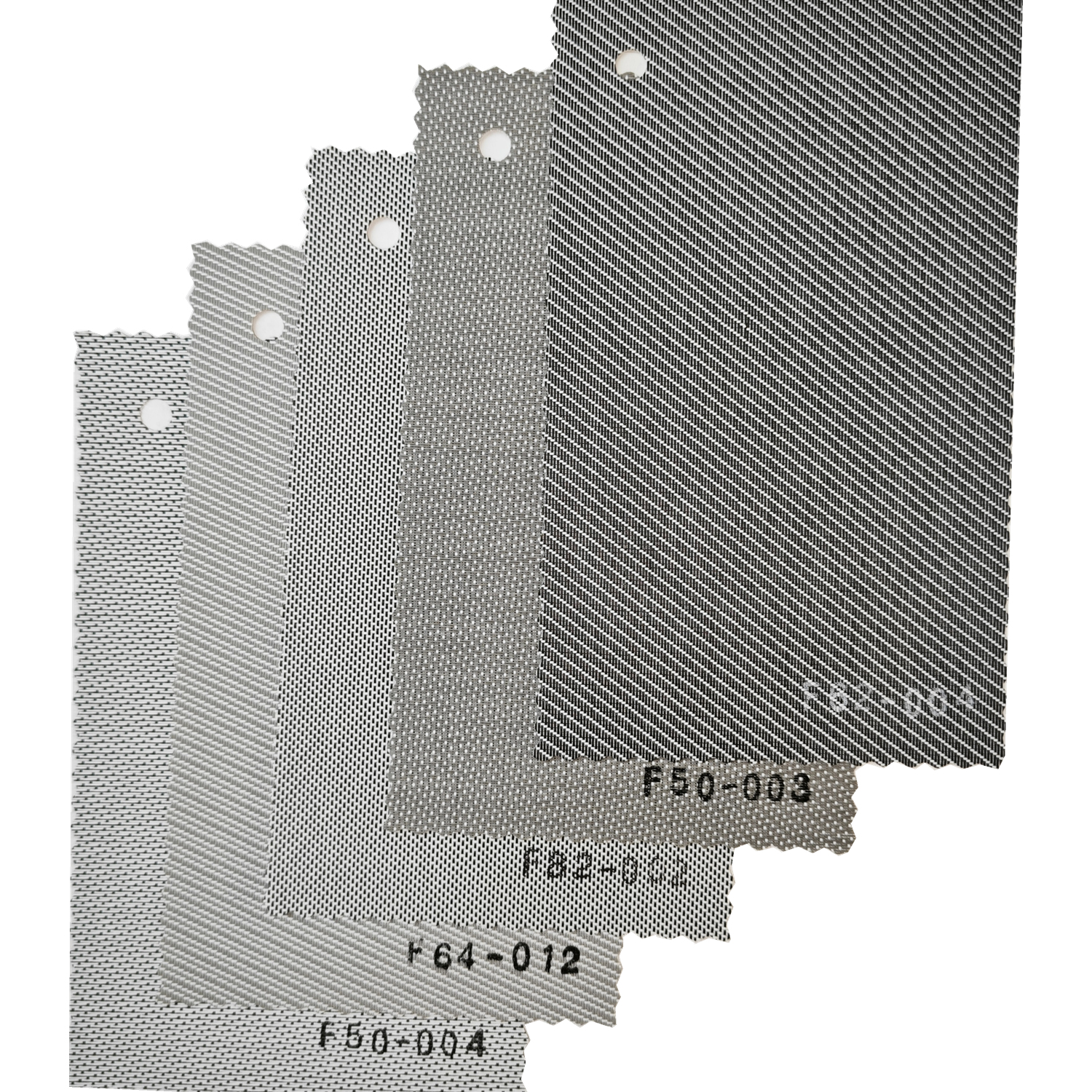
When selecting sunscreen shade fabric, one of the most important factors to consider is the Openness Factor. This term refers to the percentage of open space in the fabric weave, typically ranging from 1% to 10%. It directly affects the fabric’s light filtration, privacy level, UV protection, and energy-saving performance.
1. Light Control & Visibility
Sunscreen fabrics with a higher openness factor (e.g., 5%–10%) allow more natural light to enter the room and offer better outward visibility, making them ideal for offices, living rooms, or areas where maintaining a view is important. On the other hand, a lower openness factor (1%–3%) offers better glare control and diffused daylight, perfect for reducing eye strain in bright conditions.
2. Privacy Protection
If daytime privacy is a priority, low openness fabrics work better as a privacy screen, preventing people from seeing indoors while still letting in soft light. High openness fabrics are less effective in this regard and better suited for public or open environments.
3. UV Blocking & Energy Efficiency
Lower openness means denser fabric, which offers better UV protection and reduces solar heat gain. This helps to lower indoor temperatures and improves overall energy efficiency—especially in west-facing windows or sun-exposed glass walls.
In summary, choosing the right openness factor depends on your needs for light filtering, privacy, and thermal performance. For sun-drenched spaces, go with lower openness for maximum protection. For shaded rooms or view preservation, medium to high openness is ideal.